
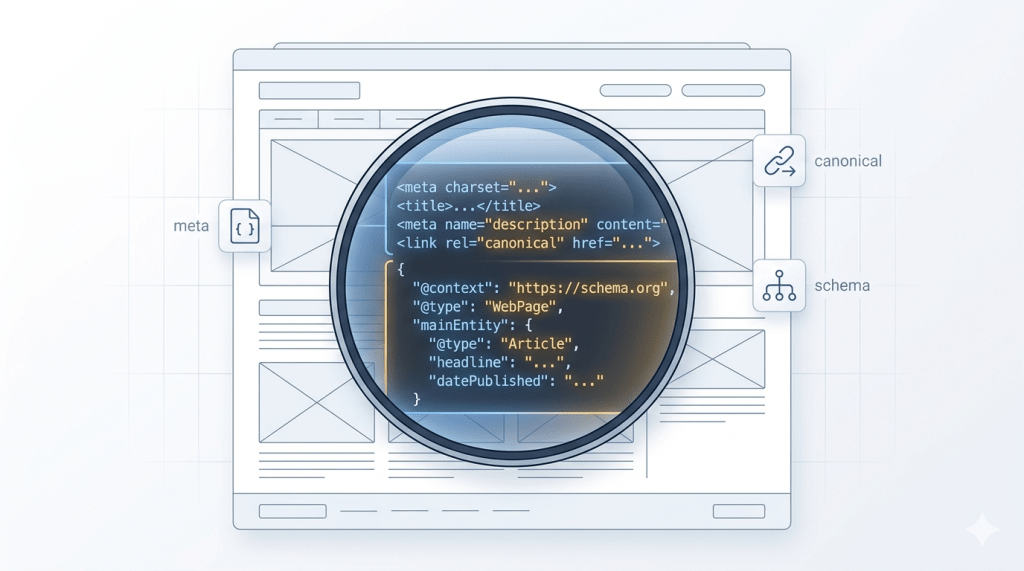
A reader named Becca raised a great question in the comments: “From an SEO standpoint, how does this affect things like schema markup, meta descriptions, and canonicals? Is Claude handling any of that or is it purely content?”
It’s one of the most practical questions you can ask when evaluating AI-assisted publishing — and the answer is more nuanced than a simple yes or no.
What Claude Can Do Right Now
Meta Descriptions
Yes — Claude can write and set meta descriptions directly through the MCP (Model Context Protocol) tools connected to WordPress. When you ask it to optimize a post’s meta description, it can craft one and push it to the advanced_seo_description field used by Jetpack SEO. It won’t do this automatically on every post, but when prompted, it handles it well.
SEO Titles
Same story for custom HTML title tags. Claude can set a separate jetpack_seo_html_title — useful when you want your <title> tag to differ from the visible post heading for click-through optimization.
Excerpts and Slugs
Claude can write excerpts and set clean, keyword-friendly slugs at publish time. Small things, but they add up.
What Needs More Work (or a Dedicated Post)
Schema Markup
Schema is where things get more involved. Structured data — Article, HowTo, FAQ, Product schemas — typically lives in a plugin like Yoast, Rank Math, or a custom implementation. Claude can write valid schema JSON-LD and even insert it into post content or a header block, but it doesn’t have native awareness of your schema plugin’s settings. Getting this right requires a workflow designed around your specific setup. We’ll cover this in a dedicated post.
Canonical Tags
Canonicals are another layer of complexity. Most WordPress setups handle these automatically through a plugin, and overriding them requires writing to specific meta fields that vary by plugin. Claude can set the jetpack_seo_noindex flag, but full canonical URL control (especially for cross-domain or syndicated content scenarios) isn’t plug-and-play yet through MCP. Again — worth its own deep dive.
The Short Answer
Claude is not a passive content machine. When connected via MCP, it can touch real SEO fields — meta descriptions, titles, excerpts, slugs, and noindex flags. For schema and canonicals, the capability is there conceptually, but the implementation depends on your plugin stack and takes more deliberate setup.
The best way to think about it: Claude handles what you ask it to handle. The more specific your prompt, the more SEO-aware the output becomes. We’ll keep pulling this thread — schema and canonicals posts are coming.
Got a follow-up question? Drop it in the comments and it might become the next post.


Leave a comment